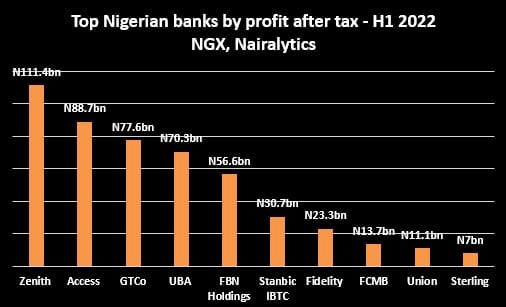
LARGEST BANK IN NIGERIA BY TOTAL ASSETS AS OF HI 2022.

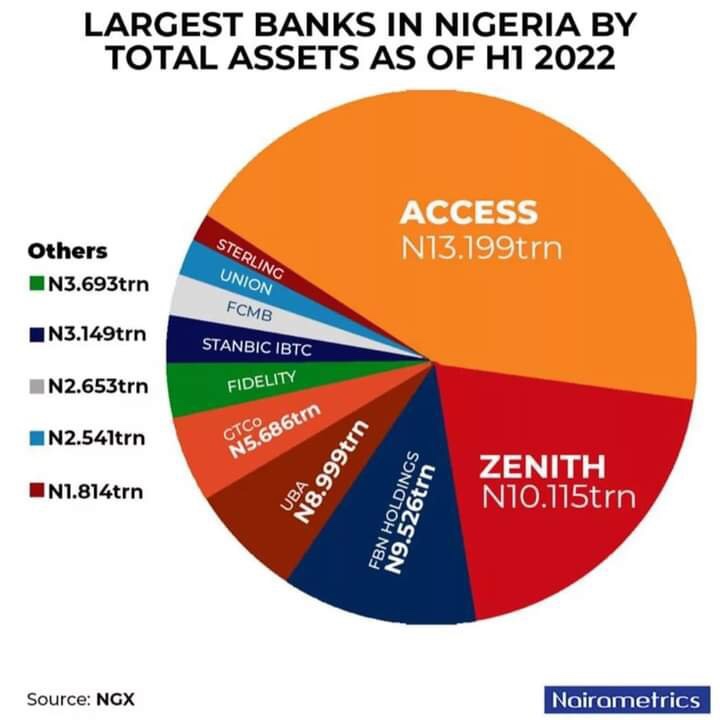
Access Bank has maintained the top spot as the largest banks in Nigeria based on the value of their total assets as of the first half of 2022 . 

The thirteen commercial bank  listed on the Nigerian Exchange (NGX) with major operations in the country saw their aggregate asset value increase by 8.1% in the first six months of the year to stand at N63.59 trillion as of June 2022 from N58.83 trillion recorded as of the beginning of the year.

The top five banks  were the major tier-1 financial institutions typically referred to as the FUGAZ, which is an acronym used to represent First Bank, UBA, GTCO, Access, and Zenith Bank. The top five banks accounted for 80.5% of the total asset of the industry. It is worth noting that Ecobank Transnational Incorporated was not included in the compilation because most of its operations are outside Nigeria.

A further breakdown of the data shows that the increase in the total assets of the banks was largely attributed to rises in customer loans. Although Union Bank recorded a decline in its total assets in the period under review, Stanbic IBTC recorded the highest increase with a 14.8% increase to stand at N3.15 trillion from N2.74 trillion as of the beginning of the year.

Access Holdings Plc tops the list with a total asset value of N13.19 trillion as of June 2022, representing an increase of 12.5% compared to N11.73 trillion recorded as of the beginning of the year.
  • The financial institution, which is a newly restructured holding company accounted for 20.8% of the total assets of the thirteen banks under consideration. The uptick in the total asset value of the bank can be attributed to improvements in some of the asset components, especially loans and advances.
  • Specifically, loans and advances to customers rose to N4.62 trillion as of the period under consideration from N4.16 trillion recorded as of the beginning of the year. This means that Access Bank gave out an additional N458.2 billion in loans to its customers in the first six months of the year.
  • Also, investment securities rose by N493.6 billion to stand at N2.76 trillion. The value of its property and equipment increased to N261.8 billion from N247.7 billion, having spent N36.7 billion on the acquisition of property and equipment in the same period.
  • Meanwhile, Access Bank has entered into a binding agreement with Centum Investment Company Plc to acquire its entire 83.4% equity stake held by Centum in Sidian Bank Limited.
  • Also, the holding company received regulatory approval in August 2022 to acquire a majority equity stake in First Guarantee Pension Limited, in a bid to evolve into a financial service holding company.
  • Zenith Bank reported a total asset value of N10.12 trillion as of June 2022, an increase of 7.1% from N9.45 trillion recorded as of December 31st, 2022. Zenith Bank accounted for 15.9% of the total assets of the banks listed on the Exchange.
  • The increase in its total assets was as a result of improvement in its cash and balance with the Central Bank, treasury bills, loans to customers as well as investment securities.
  • The bank, which is also the most capitalized bank in the Nigerian equities market, saw its loan books increase to N3.49 trillion as of June 2022 from N3.36 trillion, while investment securities stood at N1.48 trillion.
  • In the same vein, property and equipment improved, albeit only marginally from N200 billion to N202.3 billion. Investment securities improved from N1.3 trillion recorded as of the beginning of the year to N1.48 trillion by the end of June 2022. 

FBN Holdings posted a total asset valuation of N9.53 trillion as of June 2022, representing a 6.6% increase from N8.93 trillion recorded six months earlier. FBN Holdings, which is the parent company for First Bank accounted for 15% of the total aggregate assets for the thirteen banks.

  • FBN’s asset growth can be attributed to increasing in its cash and balances, loan books, and investment securities. Its cash and balances with Central Bank rose from N1.59 trillion to N1.64 trillion in the six months period.
  • Also, its loans and advances to customers improved from N2.88 trillion as of December 2021 to stand at N3.38 trillion by the end of June 2022. It is worth adding that its investment securities rose to N2.16 trillion from N1.96 trillion.
  • On the flip side, its property and equipment declined marginally to N113.79 billion from N115.9 billion recorded as of December 2021.
  • United Bank for Africa ranks fourth on the list of biggest banks in Nigeria based on total assets with a value of 8.99 trillion, representing a 5.4% increase from N8.54 trillion recorded by the beginning of the year.
  • UBA accounted for 14.2% of the total asset value of the entire thirteen banks on the list. A further breakdown of the bank’s statement of financial position showed that it’s cash and bank balances improved to N1.98 trillion from N1.82 trillion recorded as of the beginning of the year.
  • Also, its loans and advances to customers increased to N2.75 trillion from N2.68 trillion, while loans to banks improved to N198.1 billion as of the period under review. Property and equipment stood at N183.6 billion, while investment securities at fair value stood at N1.63 trillion.
  • Guaranty Trust Holding Company Plc (GTCO) posted a total asset value of N5.69 trillion as of June 2022, which is 4.6% higher than the N5.44 trillion recorded as of December 2021. GTCO accounted for 8.9% of the total assets of the thirteen banks.
  • The banking giant, which also restructured into a holding company last year saw its cash and bank balances with the Central Bank rise to N1.04 trillion in June 2022 from N933.59 billion as of the end of last year.
  • Also, loans to customers increased marginally from N1.8 trillion as of December 2021 to N1.83 trillion by the end of June 2022. Meanwhile, financial assets at fair value through profit or loss improved significantly from N104.4 billion to N262.32 billion.
  • Fidelity Bank has N3.69 trillion
  • Stanbic IBTC has N3.15 trillion of asset as of 2022.
  • FCMB has N2.65 trillion
  • Union Bank has N2.54 trillion
  • Sterling Bank has the lowest asset with N1.81 trillion as of 2022.

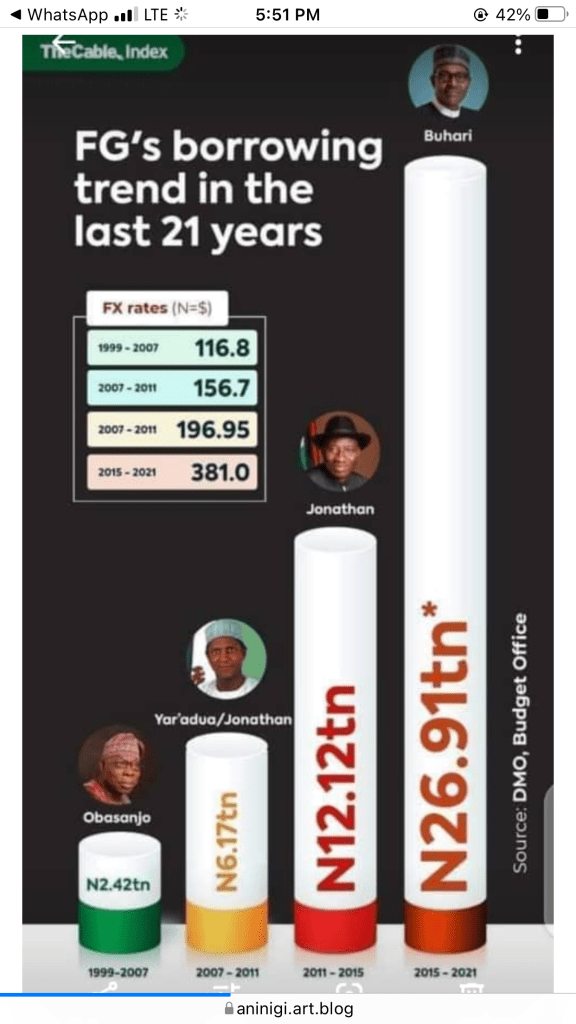
Federal government borrowing trend in the last 21years

FG’s debt profile surged 658% to N26.9trn in 21years

Nigeria’s public debt has been on the rise. Despite securing debt relief during the Olusegun Obasanjo-led administration, successive governments have continued on a borrowing spree — the federal government’s component of the public debt surging 658 percent to N26.9 trillion in the last 21 years.

This has raised concerns among Nigerians on the debt sustainability of the country amid dwindling revenue to meet the debt obligations to creditors.

Within two weeks, the senate approved three different loan requests by President Muhammadu Buhari.

On July 7, 2021, the upper chamber approved a loan request of N2.343 trillion, approximately $6 billion and another $8.3 billion and €490 million.

On external borrowings, President Buhari increased debt from $7.3 billion in 2015 to $28.57 billion as of December 2020. This means that the president incurred $21.27 billion on foreign loans to the country’s debt portfolio. 

The country’s exchange rate moved from N197 to a dollar in 2015 to N381 at the end of December 2020.

Analysis of consolidated debt showed that the external debt increased by 291.37 percent while domestic debt grew by 86.31 percent in the last six years of the Buhari government.

Overall, the Buhari-led government has had an accumulated debt of N17.06 trillion as of March 2021, using the N381 exchange rate. This represents a 173.2 percent increase from when he was elected president in 2015.

DEBT PROFILE UNDER JONATHAN’S ADMINISTRATION

At the beginning of former President Goodluck Jonathan’s tenure in 2011, the federal government had an accumulated debt of N6.17 trillion. 

Analysis of the debt figure showed that local debt amounted to N5.62 trillion while foreign debt stood at $3.5 billion (about N548.65 billion, using the exchange rate of N156.7/$1).

By the end of 2015, the foreign debt component hit $7.3 billion, while domestic debt increased by N8.4 trillion. The country’s exchange rate also stood at N197/$1. 

Overall, the federal government component of the total public debt increased from N6.17 trillion in 2011 to N9.8 trillion in 2015, representing an increase of N3.63 trillion or 58.8 percent.

YAR’ADUA/JONATHAN’S BORROWINGS

Under the Umar Musa Yar’Adua/Goodluck Jonathan-led government between 2007 and 2011, domestic debt of the federal government moved from N2.17 trillion to N5.62 trillion. The foreign component of the debt also increased from $2.11 billion to $3.5 billion within the period.

The country’s exchange rate also moved from N116.8/$1 to N156.7/$1.

The combined debt profile increased from N2.42 trillion to N6.17 trillion in four years, representing a 155 percent jump. 

Of the debt figure, Jonathan completed the tenure from May 2010 to May 2011 after the death of Yar’Adua. The period saw a surge in the federal government’s debt from N4.94 trillion to N6.17 trillion. This represents a 24.9 percent increase in one year. 

OLUSEGUN OBASANJO’S TENURE

During the tenure of former president Olusegun Obasanjo, the debt level of the federal government reduced from N3.55 trillion in 1999 to N2.42 trillion at the end of 2007.

The 8-year term of Obasanjo resulted in a dip in FG’s local and foreign debt level, representing a 31.8 percent decline.

The country’s exchange rate was between N98.02 to N116.8 to a dollar during the tenure.

Analysis of the figures showed that external debt decreased from $28.04 billion by 1999 to $2.11 billion at the end of 2007. However, the domestic component increased from N798 billion to N2.17 trillion within the same period.

The huge decline in foreign debt was a result of the substantial reduction following the pay-off of the outstanding debts owed to the London Clubs of Creditors in the first quarter of 2007

BUHARI, NIGERIA’S BIGGEST BORROWER, VIOLATING FINANCIAL LAWS

So far, Buhari is the country’s biggest borrower, increasing public debt (FG component) by more than 173 percent. Next to the Buhari government is the Yar’Adua/Jonathan administration with a 155 percent surge in borrowing.

The current government violates important financial laws in the country — the Fiscal Responsibility Act, and the CBN Act 2007.

Last year, the government exceeded the fiscal borrowing threshold as stipulated in the fiscal act. 

Zainab Ahmed, minister of finance, budget and national planning, admitted to this on the grounds that COVID-19 was good enough reason to breach the act. 

The fiscal responsibility law provides a limit of three percent debt threshold for sustainability, but the president can “exceed the ceiling if there is a clear and present threat to national security or sovereignty of Nigeria”. 

In 2020, the country’s budget deficit was at about four percent of GDP, clearly breaking the law.

On overdraft, section 38, sub-section 1 and 2, of the CBN Act, said, “the Bank may grant temporary advances to the Federal Government in respect of temporary deficiency of budget revenue” and “the total amount of such advances outstanding shall not at any time exceed 5 percent of the previous year’s actual revenue of the Federal Government”. 

By the end of 2020, CBN overdrafts to the Buhari government exceeded the limit by 69 percent of the revenue generated in 2019 – in a blatant violation of the apex bank rules. The government’s revenue in the year was N4.1 trillion, and overdraft stood at N2.9 trillion.

Also, Nigeria’s borrowing limit as a percent of GDP stood at 34.8 percent in 2020, well above 25 percent for the year. Earlier this year, the federal executive council (FEC) had strategically raised the borrowing limit to 40 percent in its Medium-term debt management strategy for Nigeria for the period 2020-2023. 

While Nigeria’s debt-to-GDP is lower than those of its peers, its debt-to-revenue is too low to sustain the country. Of every N100 government makes in revenue, N97 now goes to debt servicing.

In the last four administrations, only Obasanjo’s team reduced public debt; his government recorded a 32 percent decline with the London Club agreement.

INCREASING PUBLIC DEBT WORRYING

While borrowing is required to support the economy, sustainability transparency and sustainable repayment plan are crucial.

Femi Oke, an economist, said Nigeria’s soaring high debt profile is not good for the country.

“The Nigerian government borrows in the worst possible way and in a very outdated manner. This causes a backlash to the government. Because Nigeria’s debts are not linked to any assets, we just go to the treasury bill market and borrow, at any rate, that anybody wants to give you,” he said.

“There are many other countries who borrow more than what Nigeria is borrowing and don’t have any problem paying back. They borrow intelligently and efficiently, in a way that their debts service themselves.

“A more efficient way of borrowing is for the Federal Government to migrate all the debts to asset-linked debts. This means structuring the borrowing transaction like investments. There must be an underlying asset to which borrowers can use to recover the principal they gave the country plus profit.”

Vahyala Kwaga, senior researcher and policy analyst at BudgIT, said the level of borrowing – specifically in 2021- is the highest it has been in the last six years.

“The government is borrowing more, spending more and earning less revenue. For context, the government budgeted about N5.37 trillion in revenue in 2020 but only earned a total of N3.42 trillion,” Kwaga said.

“There is also no commensurate rise in revenue to counteract the continuing rise in debt servicing. A casual look at the debt servicing level from 2015 to 2020 shows that the level has steadily increased since then.

“These amounts include debt servicing on interests for ‘ways and means’ and ‘sinking fund to retire maturing Loans.’”

NIGERIA’S ACTUAL DEBT COULD BE 48.7TRN

Wilson Erumebor, a senior economist at Nigerian Economic Summit Group, said Nigeria is a case where expenditure keeps rising, revenue not improving as expected, creating a wide fiscal deficit that is majorly financed by borrowing.

“While borrowing is required to support the economy, especially given the impact of the pandemic, what we need to be concerned about is how sustainable Nigeria’s debt position is,” he said.

“Debt has risen N33.1 trillion as of March 2021, an increase of 162.7% in the space of about five years.

“When we include AMCON’s liabilities and CBN’s ways and means, debt could amount to about N48.7 trillion, which is around 32 percent of GDP.

“Debt to GDP may seem quite low at 32 percent, we must understand that debt is serviced with revenues, so if debt servicing is increasing and revenue is not performing, then we have a problem.”

Erumebor suggests that the federal government must improve efficiency, transparency, blocking leakages, and deliver value on public projects, despite limited resources.

“We must work towards unlocking many sectors and many areas where the country can earn revenue.”

In 2020, the International Monetary Fund (IMF) said Nigeria’s low debt-to-GDP ratio is highly vulnerable to shocks. 

“Despite Nigeria’s relatively low debt level, liquidity-based indicators-driven by low revenue mobilisation-remain concerning, with the interest bill representing a high share of government revenue (but low relative to GDP),” IMF said in its country’s report for Nigeria.

“Stress scenarios confirm the vulnerability of public debt to a low growth/wide primary deficit scenario. The interest-to-revenue ratio is particularly vulnerable to a real interest rate shock but remains sustainable.”

Recently, market researchers at United Capital also expressed concern over the country’s rising debt sustainability risk. “The government has historically justified its rising debt profile by the compliant debt-to-GDP ratio of less than 30.0%,” the research firm said.

“However, we reiterate our position that the FG’s debt service cost as a percentage of revenue is a fairer reflection of the country’s debt sustainability position.”

At an overall public debt of N33.1 trillion ($87.24 billion), the implication remains that every Nigerian owes both local and foreign organisations N165, 500.

EDITOR’S NOTE: This story has been updated to reflect the true figure in FG’s debt increase.

NEXTAbba Kyari: Superstar cop in the soup »

PREVIOUS« EFCC releases Saraki from custody — after questioning over ‘money laundering’

LEAVE A COMMENT

SHARE

TAGS: FG debtGoodluck JonathanMuhammadu BuhariNigeria’s biggest borrowerNigeria’s Debt Profileolusegun obasanjoUmar Musa Yar’adua

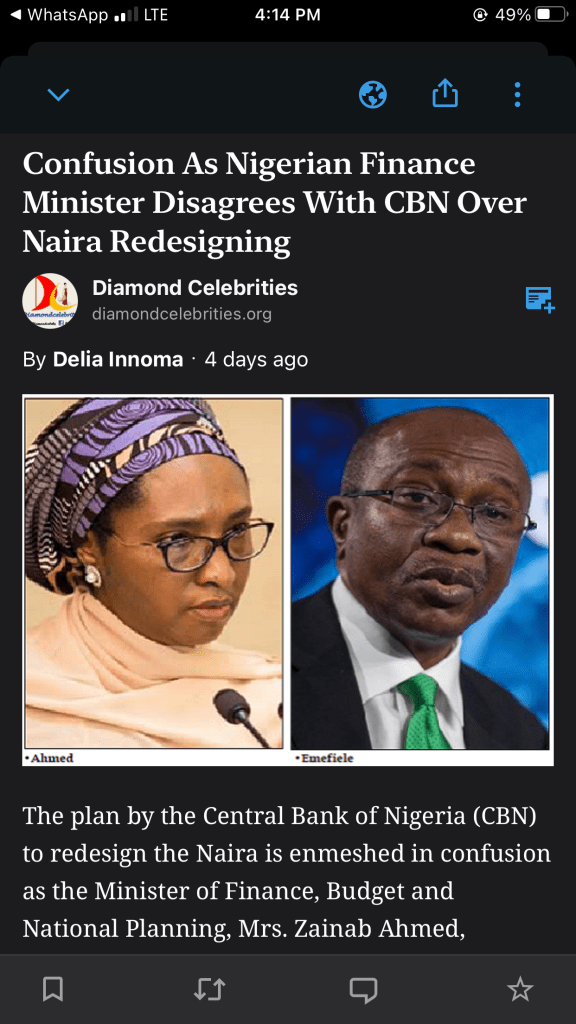
Confusion as Nigeria finance minister disagrees with CBN over Naria redesigning

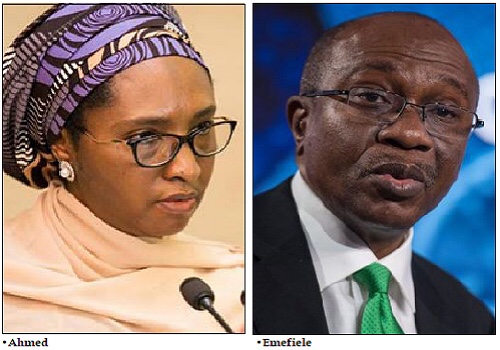
The plan by the Central Bank of Nigeria (CBN) to redesign the Naira is enmeshed in confusion as the Minister of Finance, Budget and National Planning, Mrs. Zainab Ahmed, disowned the policy statement yesterday.

The Minister said she and her ministry were not aware of the policy but only heard of it in the media.

She said yesterday that she would not comment on it “as regards merits or otherwise” because her ministry was not consulted by the CBN.

The CBN Governor, Godwin Emefiele had on Wednesday said that the apex bank would redesign the country’s currency from N200 denomination to N1,000 notes.

He said that the action was taken in order to take control of the currency in circulation just as he insisted that the bulk of the nation’s currency notes were outside banking operations, adding that the CBN would not allow the situation to continue.

The planned policy, he added, was in line with Sections 19 subsections A and B of the CBN Act 2007, upon which the management of the CBN sought and obtained the approval of President Muhammadu Buhari to redesign, produce, and circulate new series of banknotes at N200, N500, and N1,000 notes.

Some economic experts have frowned at the decision of the CBN, describing it as a misplaced and outrageous idea.

-TheNation

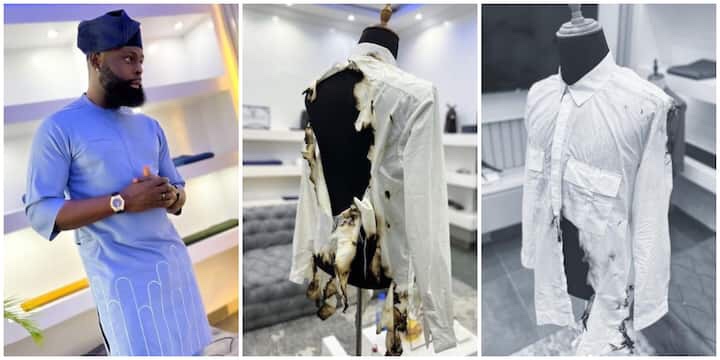
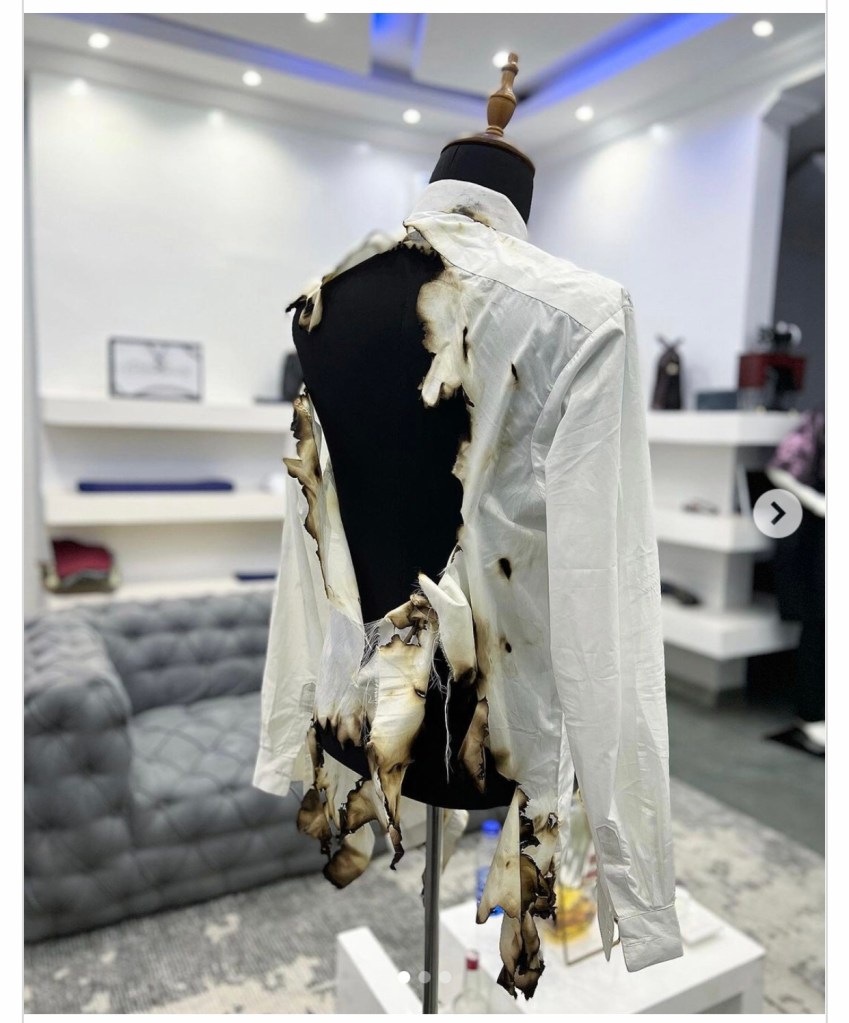
Fashion designer yomi casual share video of ‘ burnt shirt’ selling for 3.8m

Nigerian fashion designer Yomi Makun recently took to social media to share one of his latest creation The creative director of Yomi Casual posted photos of a white button shirt which appeared to be severely burnt The designer, who priced the piece for over N3 million, got social media users buzzing with reaction find the “Recommended for you” Yomi Makun, the owner of the clothing brand Yomi Casual, recently got the internet talking after he unveiled one of his latest designs. It is the era of avant-garde designs, and Yomi has no plans to be left out of the trend.

He recently unveiled an interesting new design comprising a white button shirt that appeared to be burnt severely. In his caption, he revealed that the piece cost around N3,898,200 ($8,9000) and urged fans to tag celebrities who they thought would wear the design.

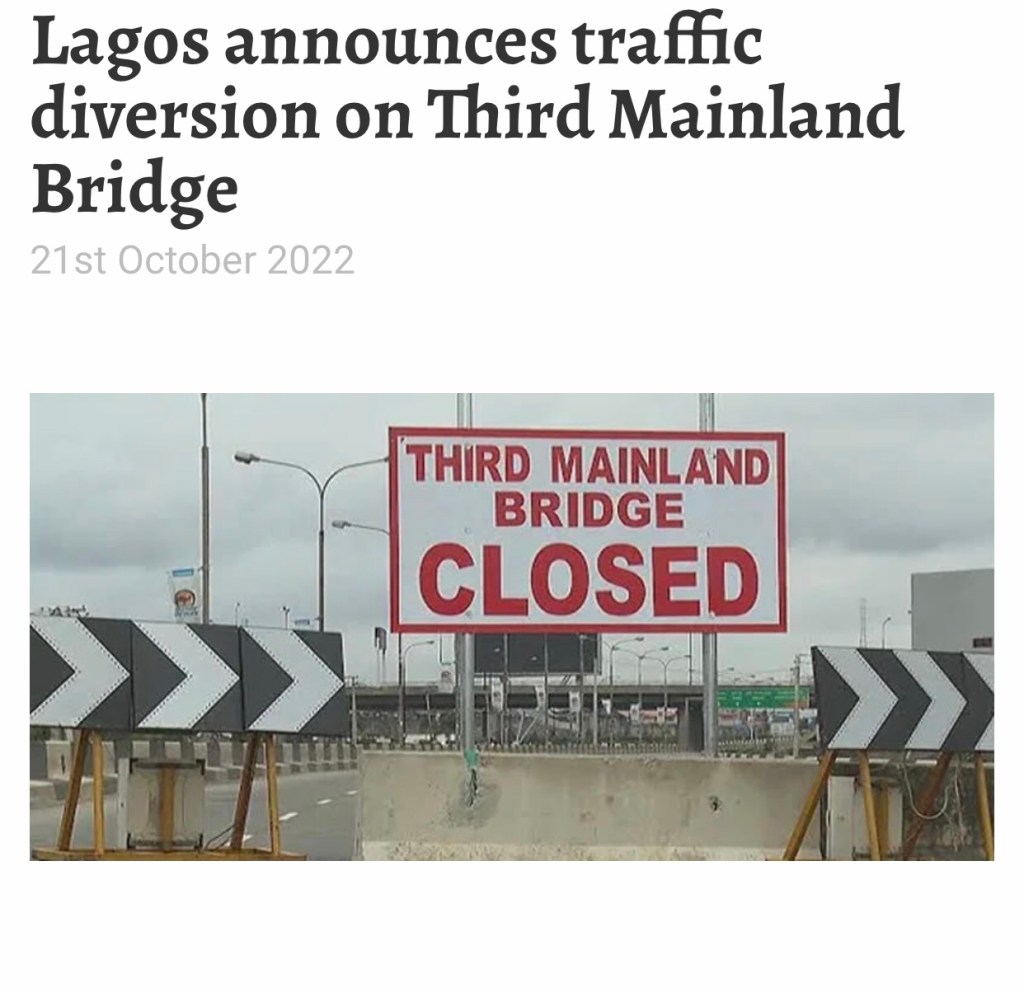
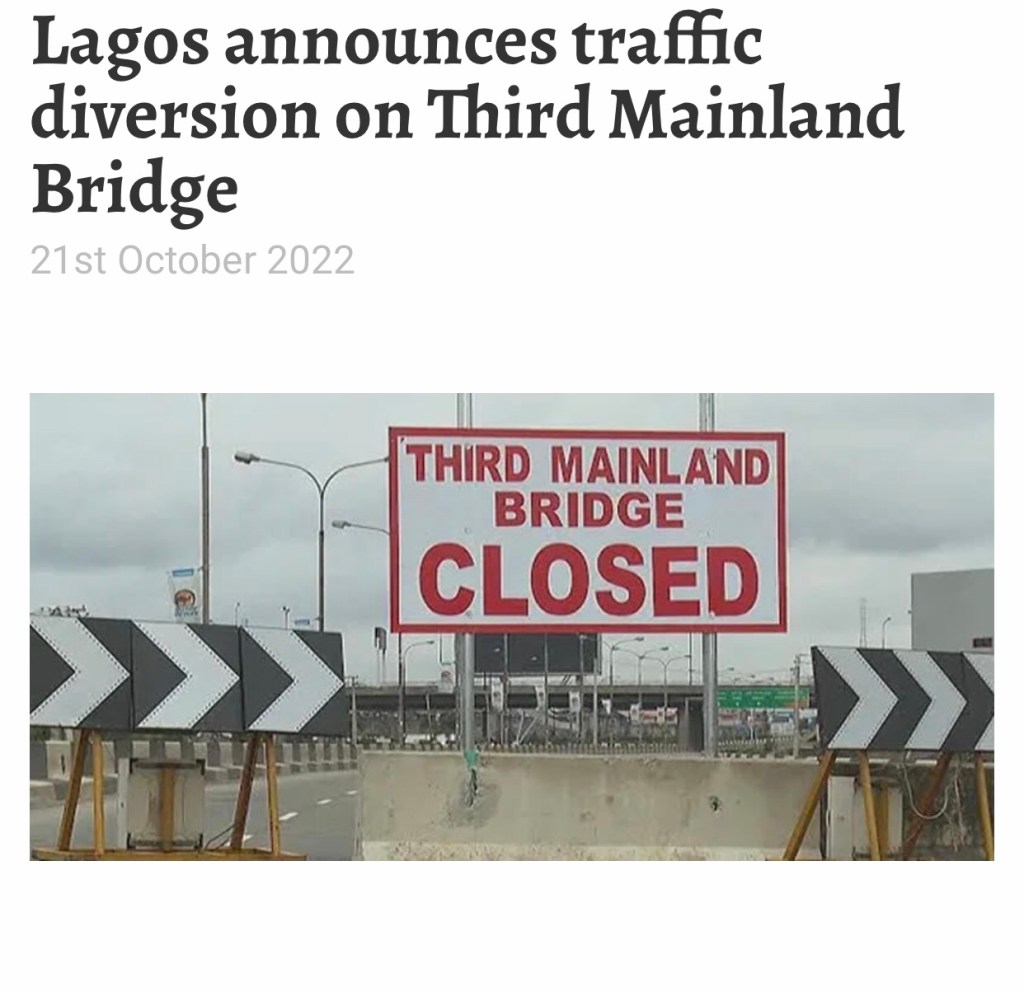
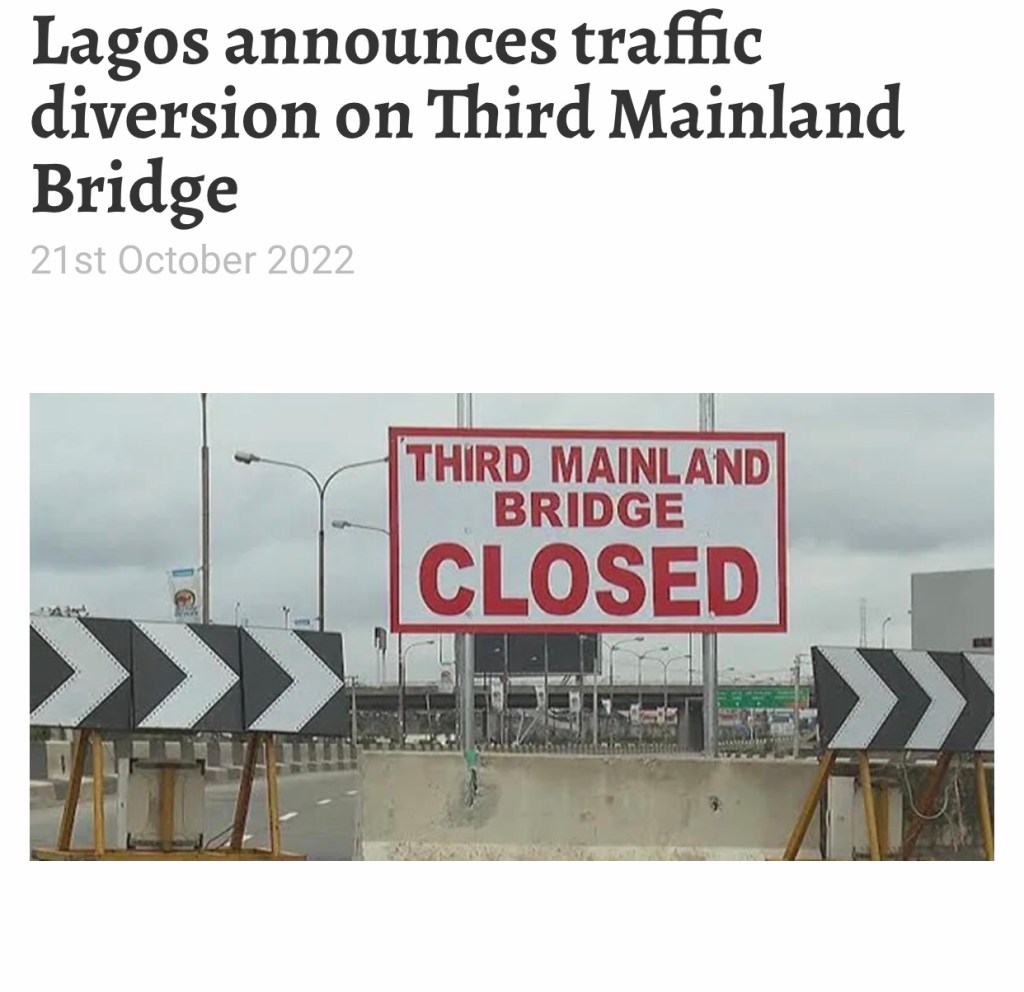
LAGOS ANNOUNCES TRAFFIC DIVERSION ON THIRD MAIN LAND BRIDGE 21oct 2022

The Lagos State Traffic Management Authority has announced road closure and traffic diversion on the Third Mainland Bridge to enable officials of the Lagos State Emergency Management Agency recover a waste disposal truck from the lagoon around the bridge in the state.

The spokesperson for the Lagos State Traffic Management Authority, Taofiq Adebayo, in a statement on Friday, said the recovery of the truck would commence around 1.00pm on Sunday, October 23, 2022.

Adebayo explained that the truck recently fell off the Third Mainland Bridge into the lagoon approaching Iyana Oworonshoki, inwards Alapere-Ogudu axis.

He said, “There will be road closure and traffic diversion on the Third Mainland Bridge for motorists moving from Lagos Island to connect the Mainland through Iyana Oworonshoki while the recovery operation is ongoing.

In order to avoid delay and inconvenience during the recovery exercise, the following alternative routes are advised for motorists coming from Lagos Island and Mainland (Ebute-Metta) towards Iyana Oworonshoki on the Third Mainland Bridge. Related News

From Victoria Island/Ikoyi/ Lagos Island, use the Carter Bridge to Ijora Olopa by LAWMA Headquarters to the Eko Bridge, to Funsho Williams Avenue (old Western Avenue), to Dorman-Long Bridge, to Ikorodu Road through Fadeyi and connect desired destinations.

“Or use the Carter Bridge to Iddo to Oyingbo to Herbert Macaulay Way to Jibowu to Ikorodu Road and connect desired destinations. From Victoria Island/Ikoyi/ Lagos Island; to Mainalnd (Ebute-Mette); use Adekunle interchange to Herbert MacUalay Way to connect desired destinations

Please, note that motorists moving from the Mainland inwards Lagos Island are not affected by this recovery exercise on the Third Mainland Bridge.”

Adebayo while seeking the cooperation and support of all road users/motorists, said security and traffic management personnel would be deployed to all the alternative routes to ensure free flow of traffic, safety and security of all road users.

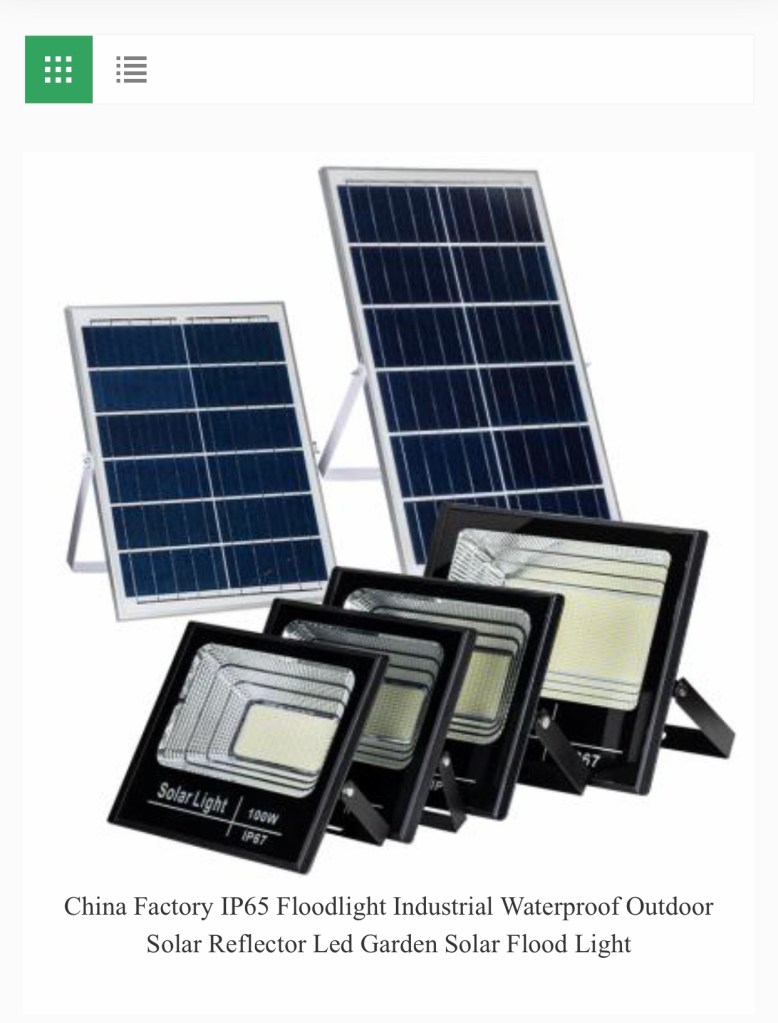
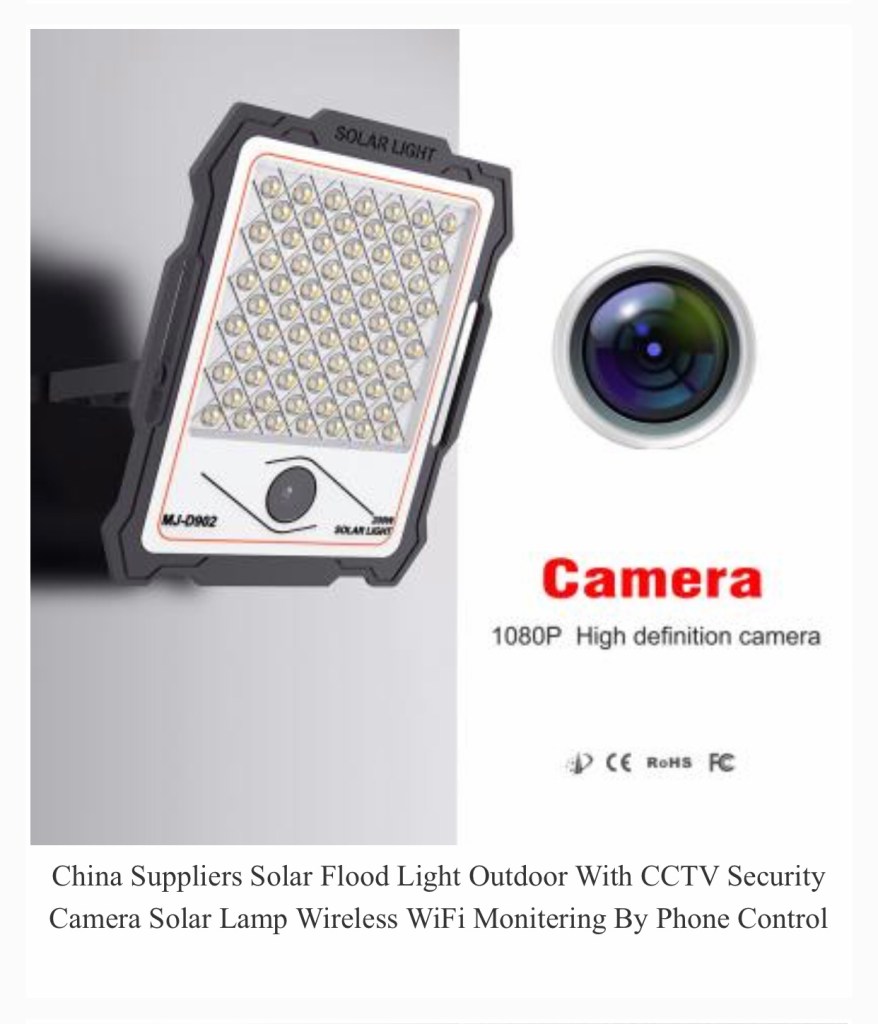
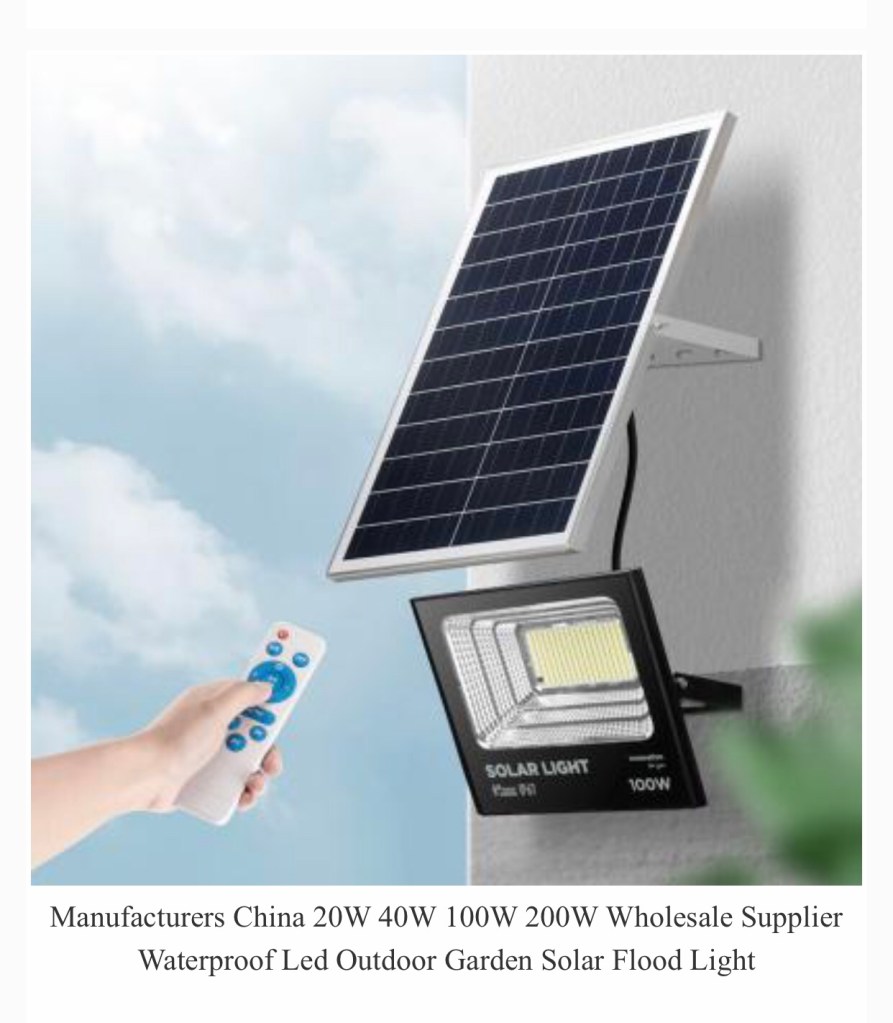
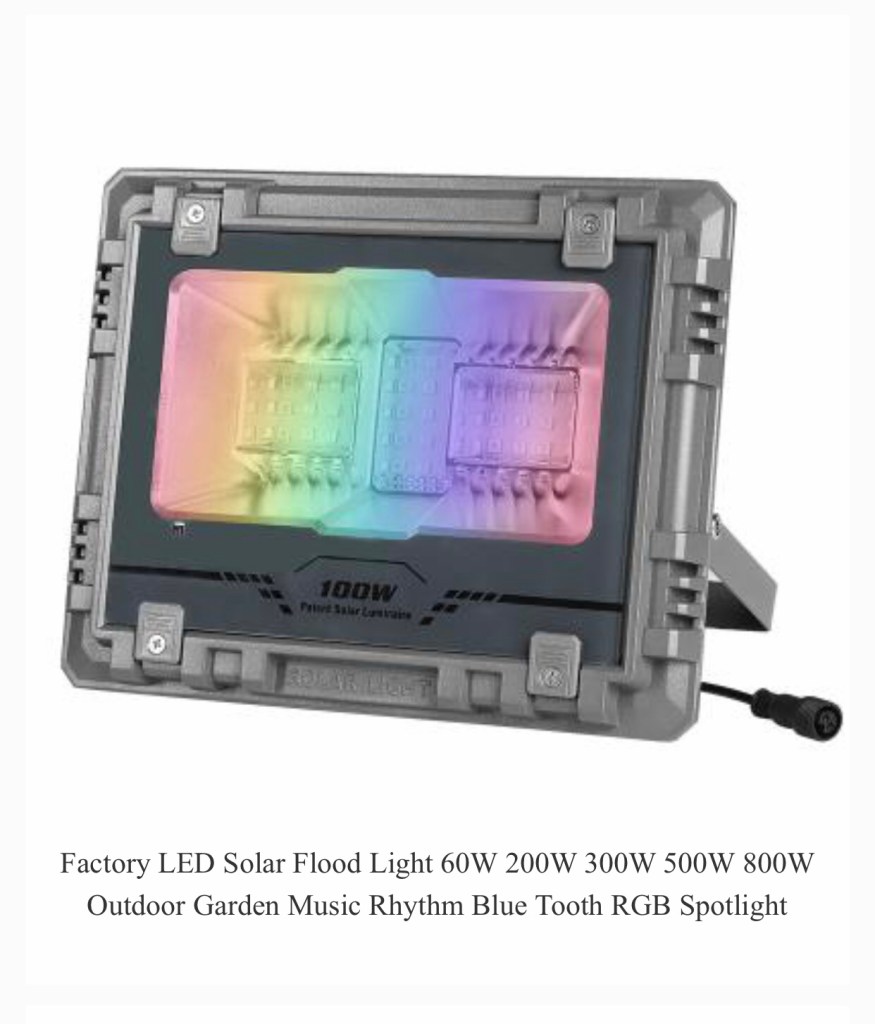
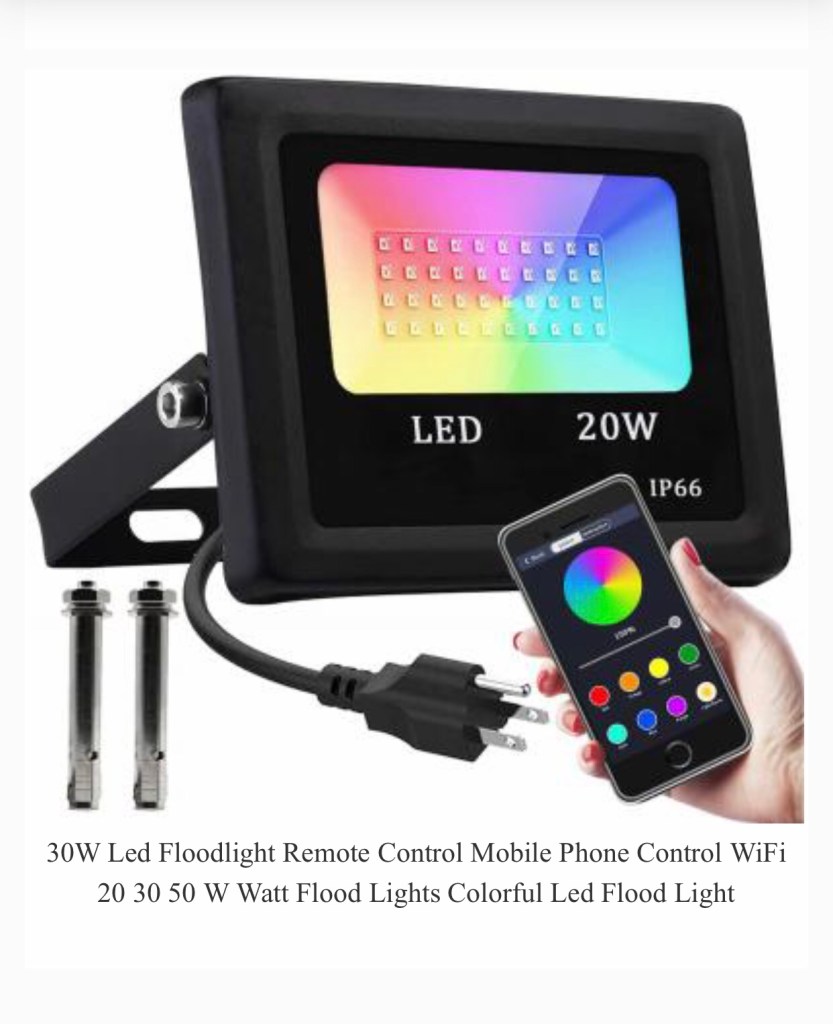
Solar flood lights harness their energy from the sun and don’t require wiring or electrical work. Making is simple to install in minutes and ideal for remote areas or places without power. We providing exceptional goods, reliable service and personalized led lighting solutions. Energy efficient lighting. Competitive pricing. High quality products.

High in quality and affordable, waterproof and can be used anywhere.

100% charged

Not just the quality, but luxury and affordable

Luxcruzlighting

I Will Go to Jail for Chioma”: Davido Declares, Says He Has Spent N32 Million To Take Her Shopping in Dubai Wednesday, October 19, 2022 at 7:36 AM by Yinka Obey A video of Nigerian music superstar, Davido, speaking about his fiance, Chioma Rowland. has created a major talking point online In the video, Davido declared the unimaginable things he could do and has done for Chioma in the past He also mentioned the huge amount of money he spent taking her shopping and maintained that he could be behind bars for her Nigerians have trooped to the comments section of the singer’s famous interview to share mixed reactions.

Luxury bag for his hot baby mama and soon to be wife in 2023. Congratulation to Chioma and Davido in advance it was huge, shop with us to see more trending videos and photos.

Nigerian singer Davido is clearly in love with his third baby mama Chef Chi and it is a thing of joy to fans and even colleagues. In a post on his page, the 30BG boss shared his photos, as well as one taken with Chioma on one of their recent London trips. The Assurance crooner couldn’t help but gush over his woman as he revealed that she is the one in his heart.

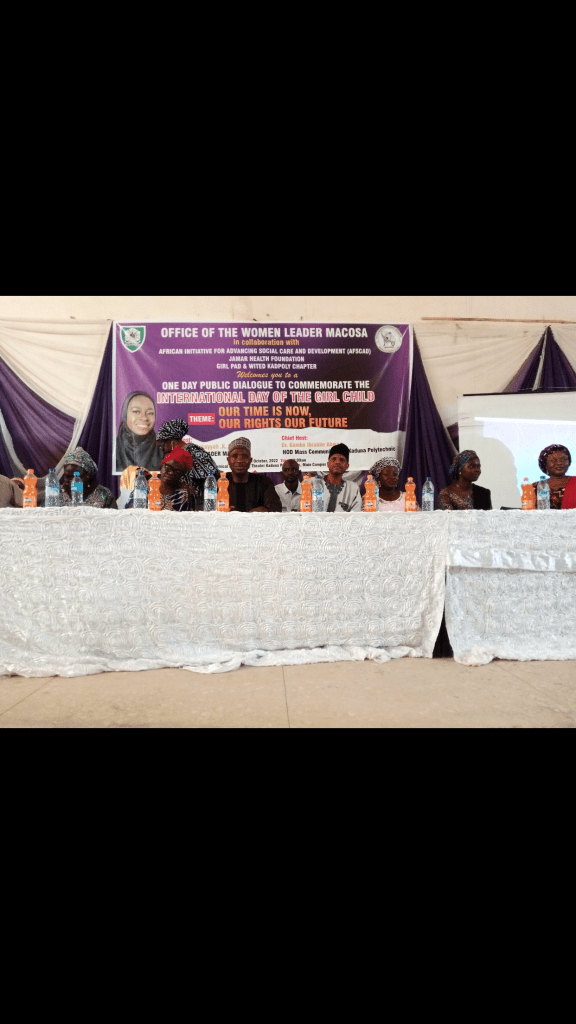
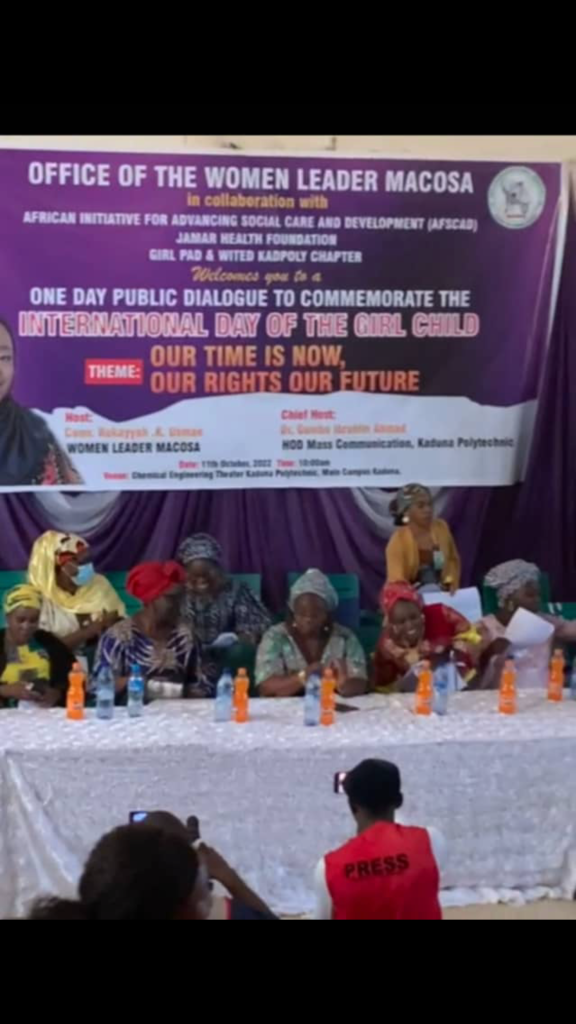
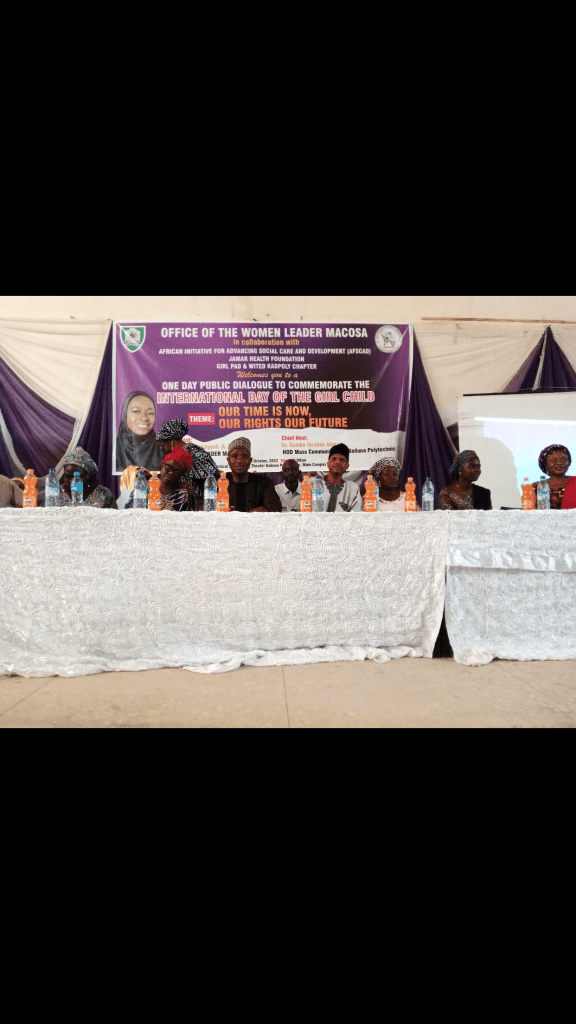
How kaduna polytechnic marked The International day of the girl child.

Every 11 October is marked as the international day of the girl child all over the world. This year federal polytechnic was not left out, as it also marked the day it was celebrated in a very unique style under the leadership of comrade Rukayya .R. Usman, the Macosa women leader. The occasion was graced with good numbers of dignitaries in the department ,other departments and outside the school environment. The head of department (hod) of mass communication.Dr. Gambo Ibrahim Ahmad, Dr. Ashara, Mrs yetunde, Mal. A’isha magaji, Dr. Fati, Dr. Jamima and Dr. Comfort from textile department and in collaboration with Dr. Jallo who is the founder of the Non Governmental Organization jamar and other notable people present, especially all the female students of mass communication department.

Dr Gambo Ibrahim Ahmad welcome all that were present and thanked the women leader for organizing the programme and stressed the need for us to look for the girl child in our society and also remind us of the importance of the girl child. After the opening remark Mal. Sanusi also gave us some insight of what is expected of the girl child and he also gave some problems of the girl child according to UNICEF that out of Four (4) girls is out of school and uneducated and she is force to early marriage by her parents. He further noted that genital mutilation is now illegal and any parent caught in the act will be sentence to three months imprisonment or a fine of five thousand naria also under age marriage among other things that is not in line to make the girl feel safer.

Dr. Fati, she made a very notable speech on the importance of the girl child having access to sanitary pads. She went further to stress the need for us that is we that are girls and are educated to work hard and harder to see how many girl child we can push further and see that she completes her education, Dr. Fati said those who are desperately in need of sanitary pads is the girl child in interior villages and even the urban areas that cannot afford sanitary pads, giving instance the young girl child hawking grandaunt, kuli kuli, maize cannot afford sanitary pads. So it is our responsibilities as girls to help the girl child have access to sanitary pads.

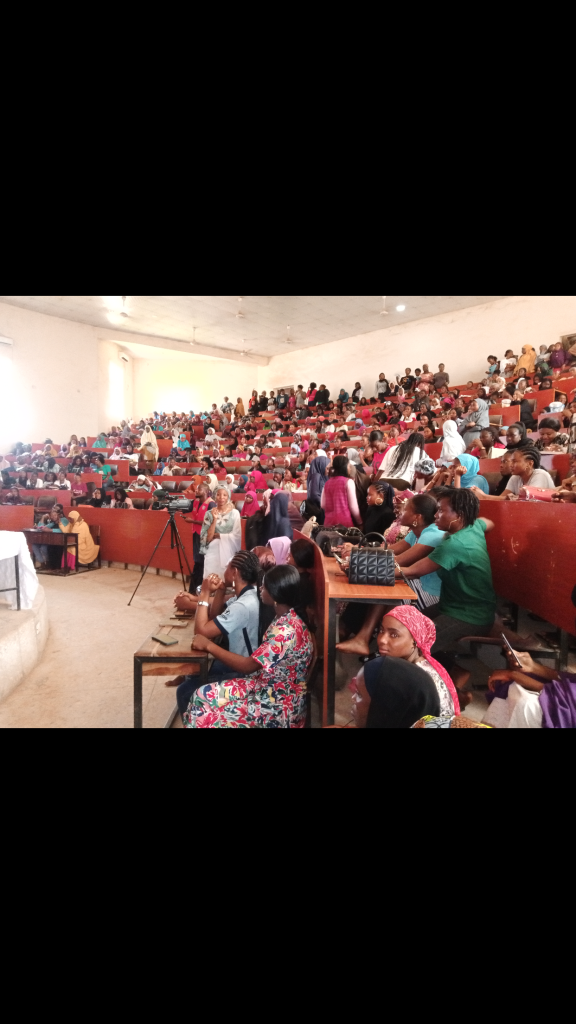
One of the representatives from ‘Wepad’ NGO, stressed the need for hygiene how we should take proper care of our bodies and environment as girls, and also helpful to us as girls. and through her over five thousand female students present went home with a Mopped sanitary pad.

Dr comfort encouraged us on having a handwork, she said it will help us beyond our imagination and how surprised we can actually be if we learn a handwork and put in our best to it, it will take us places. She used the representative of ‘Wepad’ as an example that despite she works with an NGO she runs a business of gbomo and she pub-lice her business without shame and any form of intimidation.

The founder of jamar health foundation Dr. Maryam Mohammed Jallo educated us present on the female genital virginal, types of family planning, symptoms of diseases such as HIV, hepatitis, cancer, etc. And to go for regular check up.

The event came to a closure with the Mopped being shared and it was indeed an interesting one and it was highly educating.

How kaduna polytechnic marked The International day of the girl child.

Every 11 October is marked as the international day of the girl child all over the world. This year federal polytechnic was not left out, as it also marked the day it was celebrated in a very unique style under the leadership of comrade Rukayya .R. Usman, the Macosa women leader. The occasion was graced with good numbers of dignitaries in the department ,other departments and outside the school environment. The head of department (hod) of mass communication.Dr. Gambo Ibrahim Ahmad, Dr. Ashara, Mrs yetunde, Mal. A’isha magaji, Dr. Fati, Dr. Jamima and Dr. Comfort from textile department and in collaboration with Dr. Jallo who is the founder of the Non Governmental Organization jamar and other notable people present, especially all the female students of mass communication department.

Dr Gambo Ibrahim Ahmad welcome all that were present and thanked the women leader for organizing the programme and stressed the need for us to look for the girl child in our society and also remind us of the importance of the girl child. After the opening remark Mal. Sanusi also gave us some insight of what is expected of the girl child and he also gave some problems of the girl child according to UNICEF that out of Four (4) girls is out of school and uneducated and she is force to early marriage by her parents. He further noted that genital mutilation is now illegal and any parent caught in the act will be sentence to three months imprisonment or a fine of five thousand naria also under age marriage among other things that is not in line to make the girl feel safer.

Dr. Fati, she made a very notable speech on the importance of the girl child having access to sanitary pads. She went further to stress the need for us that is we that are girls and are educated to work hard and harder to see how many girl child we can push further and see that she completes her education, Dr. Fati said those who are desperately in need of sanitary pads is the girl child in interior villages and even the urban areas that cannot afford sanitary pads, giving instance the young girl child hawking grandaunt, kuli kuli, maize cannot afford sanitary pads. So it is our responsibilities as girls to help the girl child have access to sanitary pads.

One of the representatives from ‘Wepad’ NGO, stressed the need for hygiene how we should take proper care of our bodies and environment as girls, and also helpful to us as girls. and through her over five thousand female students present went home with a Mopped sanitary pad.

Dr comfort encouraged us on having a handwork, she said it will help us beyond our imagination and how surprised we can actually be if we learn a handwork and put in our best to it, it will take us places. She used the representative of ‘Wepad’ as an example that despite she works with an NGO she runs a business of gbomo and she pub-lice her business without shame and any form of intimidation.

The founder of jamar health foundation Dr. Maryam Mohammed Jallo educated us present on the female genital virginal, types of family planning, symptoms of diseases such as HIV, hepatitis, cancer, etc. And to go for regular check up.

The event came to a closure with the Mopped being shared and it was indeed an interesting one and it was highly educating.

Design a site like this with WordPress.com
Get started